
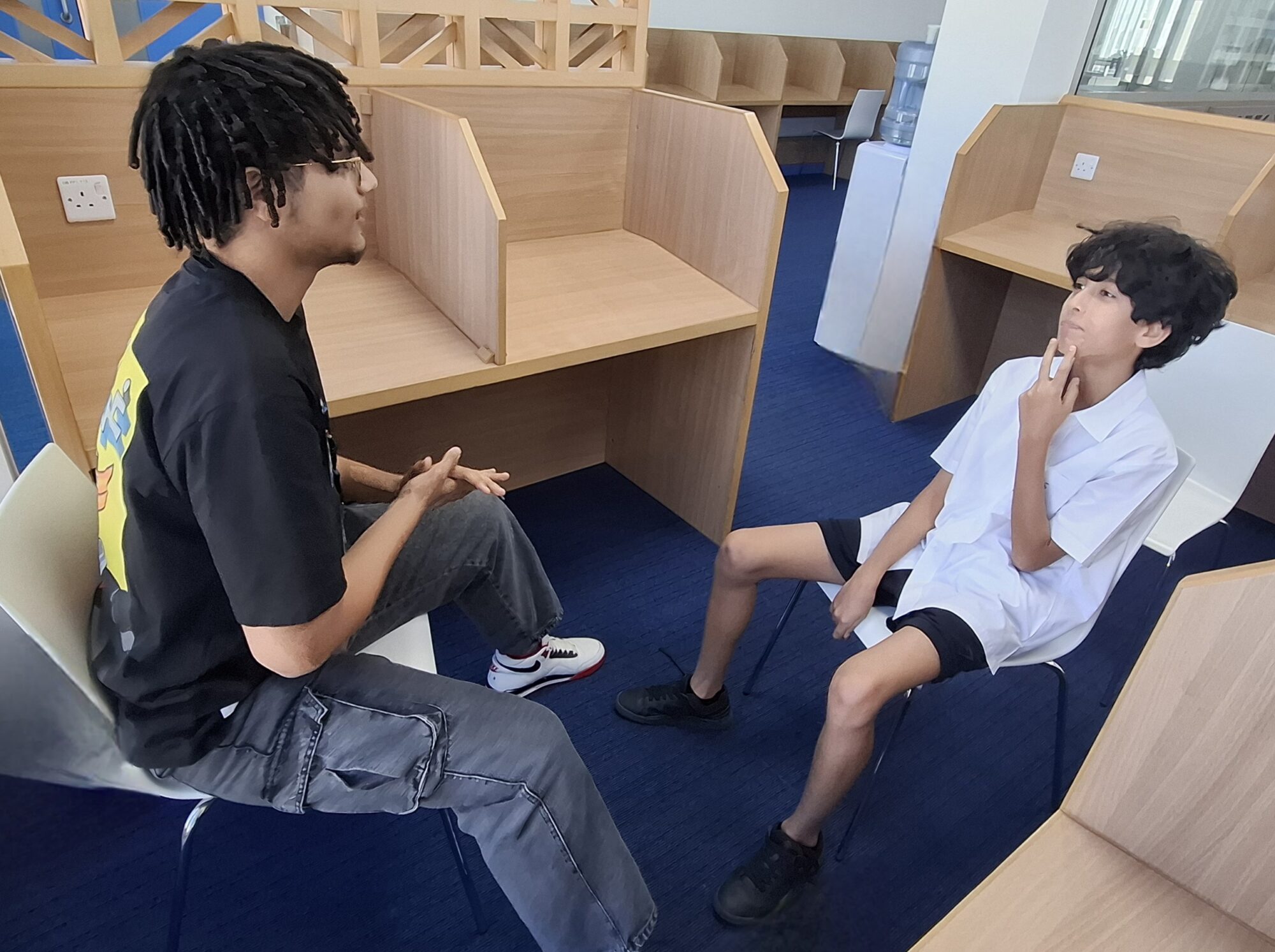
Forget traditional, advice-heavy mentorship; our Sixth Form students are now operating on a higher level more associated with executive training. Recognizing the profound impact of true coaching methodology, we have invested in teaching our senior students professional coaching techniques – active listening, powerful questioning, and non-judgmental support – to better equip their supportive peer relationships. The result is a student-led revolution in pastoral care, where the focus is firmly on cultivating student agency and embedding inclusion, transforming every supportive conversation into an opportunity for growth and empowerment.
The Double Win: Equipping Future Leaders While Empowering Coachees
This initiative is built on a deceptively simple principle: a parallel process that delivers wonderful benefits across the school. While our younger students gain self-reliance and empowerment through structured, non-directive support, the Sixth Form coaches acquire invaluable, high-level real-world emotional intelligence (EQ) skills.
The backbone of the program is an intensive extracurricular training program (ECA). We don’t just ask them to listen; we equip them with a professional toolkit. Coaches are rigorously trained in essentials like contracting (setting boundaries), true active listening, and the art of non-directive questioning. We explore established models like Gabrielle Oettingen’s WOOP and Whitmore’s GROW, all while embedding essential protocols for safeguarding and confidentiality.
Coachee and coach partnerships are carefully matched to ensure maximum benefit for a series of weekly meetings. Crucially, we have elevated the program’s status by making it a recognized, formal part of the senior school’s pastoral intervention ladder, signalling its vital role in our wider community.
“For the coaches, the reward is career-defining. They are not just giving back; they are acquiring the soft skills that define future success.”
The Strategic Advantage: Easing Staff Load and Building Systemic Inclusion
The Sixth Form Peer Coaching program is a strategic solution to two major challenges in international schools: pastoral overload and the desire to cultivate meaningful student leadership.
Capably handling low-level interventions, these student coaches act as a powerful force multiplier. They relieve the day-to-day administrative load on year leaders, freeing up essential staff time to concentrate on more complex, high-risk issues. Furthermore, students naturally feel less intimidated and more safe speaking to a peer than to a teacher, making support instantly more relatable and accessible.
For the coaches, the reward is career-defining. They are not just giving back; they are acquiring the soft skills that define future success. As Sir John Whitmore declares, “Coaching is unlocking a person’s potential to maximize their own performance. It is helping them to learn rather than teaching them”. We are simply starting this process early, strategically developing a systemic coaching culture that spans our entire school community.
From Anecdote to Data: Tangible Evidence of Student Wellbeing and Safety
The outcomes of our program aren’t just statistics; they are personal transformations shaping our school’s ecosystem.
The most gratifying evidence is the undeniable increased sense of belonging and community across year groups. Our coaches, far from simply delivering a service, feedback a profound personal shift: “I’ve become a better friend,” declared one Sixth Form coach, recognizing the real-world utility of their professional training.
“The outcomes of our program aren’t just statistics; they are personal transformations shaping our school’s ecosystem.”
For the younger students, the experience is defined by psychological safety. As one Year 8 coachee shared, “It’s been so comfortable: I feel listened to and safe.” This open, peer-to-peer relationship is proving a powerful conduit, allowing us to identify several safeguarding issues that likely would not have been disclosed to an adult authority figure. The program is not just supporting wellbeing; it’s actively enhancing our safety net.
The ripple effect is tangible, from increased voluntary sign up from potential coachees and extending to highly positive feedback from parents regarding their children’s increased self-efficacy and confidence. Ultimately, the coaches’ deep personal pride in their contribution and their certification acts as the final validation: we have created a high-value initiative that truly changes lives.
Future-Proofing Pastoral Care:
Building the program into the fabric of the school ensures that this is not a one-off project. The program is intentionally structured as an ongoing ECA with a rolling program of training. The key to its endurance is its official status, having grown into a formal part of the pastoral program.
The termly recognition of new coaches through certification helps attract ambitious new cohorts, term after term. Crucially, with every successful pairing, the sense of psychological safety for prospective coachees grows, cementing the program as a valued, naturally embedded resource within our school culture.
5 Steps to Launching Your Peer Coaching Programme
Looking to launch your own Peer Coaching program? Here’s 5 practical recommendations for leaders looking to implement a solutions-oriented initiative like this in your international school:
- Emphasise the benefits for the coaches: Frame the training not just as service, but as executive skills development for future leaders.
- Trust students to shape the programme with you: Involve the inaugural cohort in designing resources and refining the process; this builds greater buy-in and agency.
- Invest time and tools for quality training: Use external resources or internal professional development to ensure the coaching skills are professional and robust.
- Share the status and value: Integrate the program into the official pastoral structure and publicly recognise the coaches to signal its schoolwide importance.
- Constantly evaluate feedback: Use anonymous feedback from both coaches and coachees to refine pairing, training, and processes to ensure the support remains effective and non-judgmental.
By coaching the next generation in the sophisticated tools of true pastoral support, we haven’t just created a program; we’ve embedded a sustainable leadership culture where every student is empowered to grow, solve problems, and contribute to a safer, more resilient school community.
By Becky Carville

Becky Carville is the Associate Assistant Head (Coaching Development), British School Muscat

