
With over 900 international schools already, why is the international schools market growing so fast in India?
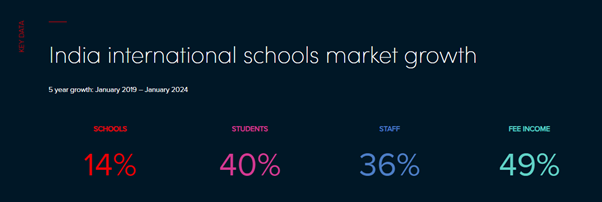
Over the last few years, India has seen a steady increase in both demand and supply for international schools, particularly in the academic year 2023-24 compared to 2022-23. Due to the changing landscape of government policies, educational engagements and prioritising quality education, the prospects look excellent for international schools in India.
Current demand characteristics
India’s diverse socio-economic landscape has given rise to a segmented market for international schools, catering to a range of income classes. Despite this segmentation, the K-12 international schools market in India has experienced a substantial increase in enrolment figures between 2023-2024, now enrolling over 416,000 students between the ages of 3 and 18. This rise in enrolment is largely attributed to the country’s economic growth, which has empowered more families with the means to invest in quality education for their children. Additionally, there is a nationwide interest in adopting key educational trends, including Special Education Needs (SEN) support, improved accessibility to educational supplies and resources, the incorporation of AI and EdTech, and aligning strategies and curricula with the UN Sustainable Development Goals (SDGs).
India’s regulatory landscape
Despite the growth of international schools and many foreign institutions opening their campuses within the country, navigating the Indian regulatory environment remains challenging. While educational institutions are registered as not-for-profit, the latest regulations allow opening foreign campuses to repatriate profits. Additionally, there are overlapping regulations on foreign monetary transactions, including the Foreign Exchange Management Act (FEMA) 1999 and the Foreign Contribution (Regulation) Act (FCRA) 2010. International schools engaging in cross-border transactions must adhere to these regulations to avoid regulatory auditing.
The narrative of international schools in India is one of growth, possibility, and an array of opportunities. The India Report 2023-24 from ISC Research includes details of new and existing regulations, alongside the latest demand and supply trends, providing valuable insights for investors, school brands and education providers navigating the dynamic education market in India.