
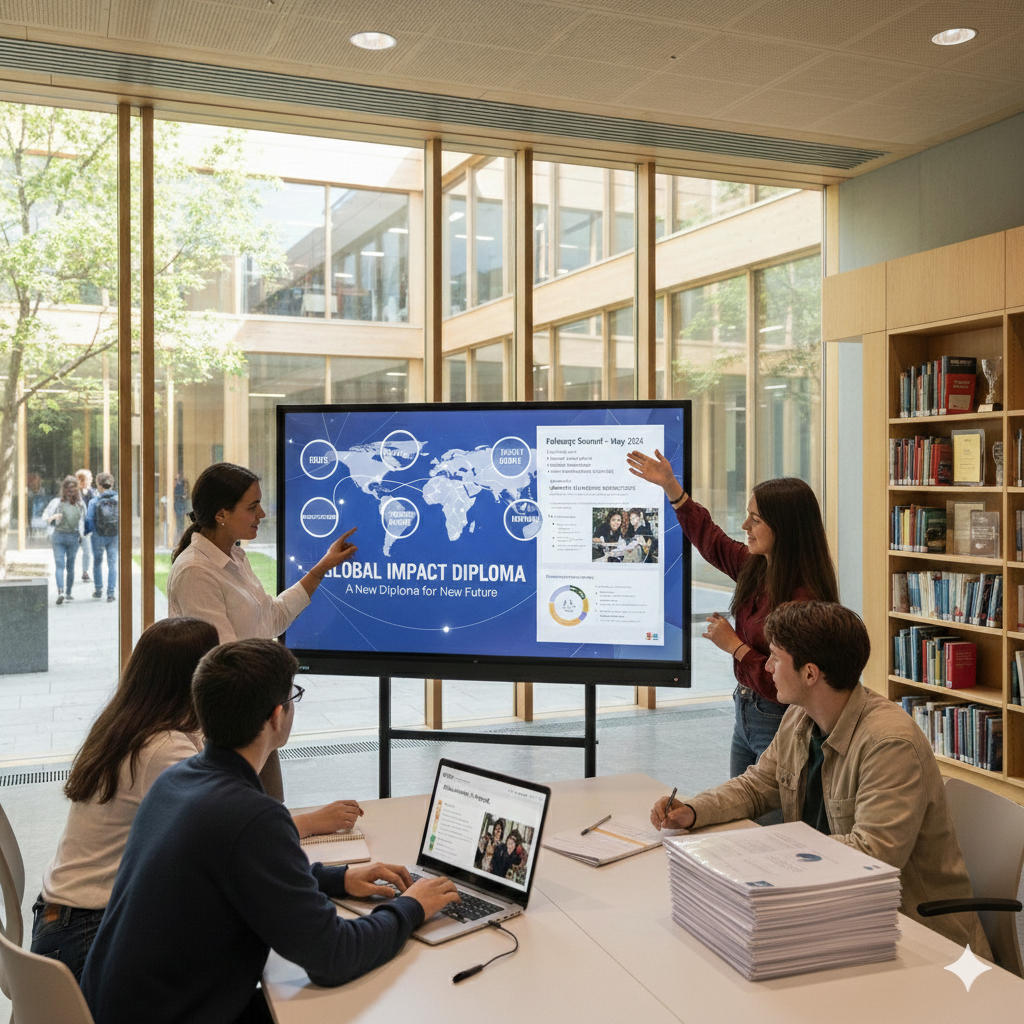
For more than two decades, our international schools have been redesigning learning for our high school students. We’ve launched academies, rethought scheduling, added interdisciplinary courses, integrated more project-based learning, and even created internship programs.
The innovations have been meaningful and necessary. But they have also been in isolation.
The Global Impact Diploma (GID) is the first large-scale attempt to collaboratively build a new high school diploma for our international schools.
A Shared Moral Imperative
In May of 2024, we came together as a group of schools for the first time at the Pathways Summit, a hybrid conference held online and in person at the American International School of Budapest. With more than 150 people from around 90 international schools, we all agreed on three urgent needs for our learners that were surfacing across continents, cultures, and schools:
Agency. Meaningful Learning Experiences. Well-being.
Research reinforces this too. Our students need more than content mastery. They need autonomy and drive, they need purpose and opportunities to contribute, and they need resilience in order to lead meaningful lives in an increasingly complex world.
Then we started designing.
Over the two-day summit, we had groups build diploma prototypes around those core needs and then pitch them so that we could get inspiration and look for patterns. Several ideas emerged like the need for a leadership course at our schools and more opportunities to engage with authentic problems. But the most important pattern of all that surfaced was this:
Impact.
We wanted our students to strive for more than grades and university acceptances. We wanted them to use their learning to meaningfully contribute to our local and global communities.
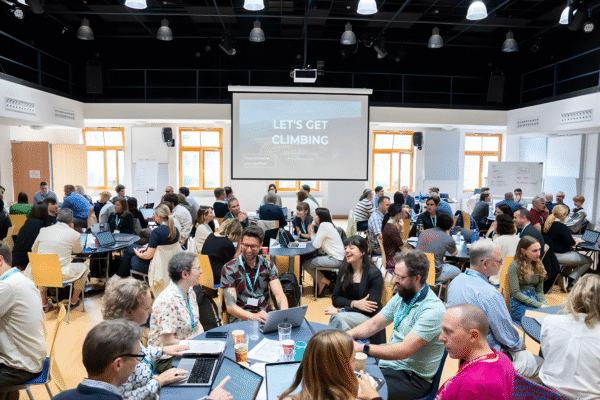
Source: Pathways Summit at the American International School of Budapest in May, 2024
This is how the Global Impact Diploma was born. It was not a top-down initiative. It has been a groundswell from educators across the globe who want to co-create rather than compete.
What Makes the GID Different.
As we started co-constructing the Global Impact Diploma, we knew we wanted it to be competency-based so that our learners build the knowledge, skills, and dispositions they will need to thrive and truly have an impact.
With inspiration from the University of Melbourne and their Melbourne Metrics, Global Online Academy’s competencies, and even UNESCO’s seven global competencies, we focused on six core competencies:
Drive, Impact Design, Collaborative Impact, Empathetic Impact, Reflection, and Communication.
From there, we co-created courses, curriculum, and assessments that would empower our learners to practice these competencies repeatedly over time. The courses now fall into three big buckets connected to self-determination theory:
- Agency for Impact Courses (Autonomy)
- GID Internship for Impact
- GID Impact Project
- Collaboration for Impact Courses (Relatedness)
- GID Entrepreneurship for Impact
- GID Imperfect Art of Living
- Specialization for Impact Courses (Competence)
- Students complete two courses connected to areas of interest that they want to start mastering. They can be IBDP, AP, GOA, or bespoke courses at our schools.
Finally, a course that connects all three of these areas, and is at the core of the GID, is our Foundations of Leadership for Impact course. This is a semester-long experience to help students learn how to lead themselves and positively influence others.
Many Innovations in the GID are structural, not just curricular:
1. The GID is co-designed, not imported.
Dozens of schools continue to contribute to the curriculum and assessments, governance and finance, even our outreach and recognition with universities.
2. The GID is global AND local.
There are aspects of the GID that we all align around like the competencies and core deliverables in each course. These are global elements. But we also encourage schools to innovate and implement the GID in a way that fits their local contexts.
3. The GID prioritizes real-world impact.
Students engage in challenge-based learning, design thinking studios, internships, and authentic impact projects that connect classrooms to communities.
4. The GID builds teacher capacity globally.
Instead of isolated innovators working alone, educators now collaborate across time zones and cultures in communities of practice.
Stories of Impact
Although we are still in our first year, the early signs of impact have been powerful. 25 schools launched the GID on their campuses this year with more than 600 students, and for 2026-2027 eight more schools have already joined as GID Member Schools.
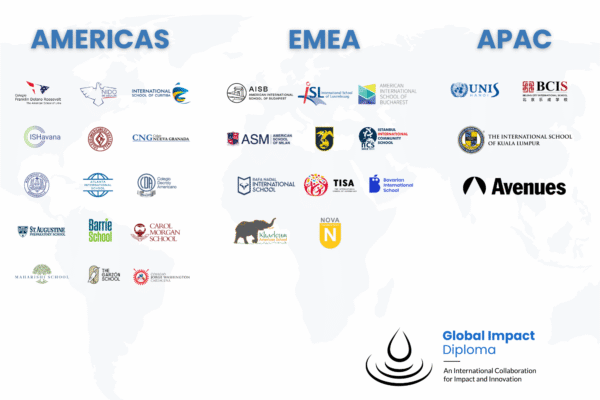
Source: Global Impact Diploma Schools for 2026-2027 (by region)
GID coordinators and teachers are collaborating several times a semester in communities of practice, and a handful of our students will be doing a joint internship experience with Fashion for Futures in Milan, Italy.
We also have a collaboration with the International Baccalaureate that allows students to earn the Global Impact Diploma and the IB Diploma. This spreads both programs out over three years, and we are piloting it with students at the American International School of Budapest this year. For 2026-2027, the International School of Luxembourg and the American International School of Bucharest will be joining the pilot as well.
This pathway honours the IB’s concept-based rigor while empowering students with the project-based rigor or the GID.
A New Diploma for a New Future
The Global Impact Diploma is more than a new credential. It is a new story about what school can be for our international students.
We are no longer just educating global citizens; we are becoming a global learning community ourselves that inspires each of us to find our highest point of contribution.
This may be our most important innovation of all.
By Corey Topf

Corey Topf is the Director of Global Pathways at the American International School of Budapest and Global Impact Diploma Steering Team.
