ISC Research has launched a new report of research into how the wellbeing of students and staff at international schools has been affected by COVID-19.
Over 600 international school teachers and leaders in 109 countries were surveyed in December 2020 when the pandemic was impacting most of the world. ISC Research collaborated with International Education Psychology Services on the research and the report.
In many ways, international schools faced similar challenges to schools everywhere, particularly related to campus closures and the delivery of online learning. They also experienced additional challenges as a result of the high percentage of expatriate staff who were severely impacted by country border restrictions. In total the wellbeing of 5.6 million students and 576,000 teachers at international schools around the world were affected by COVID-19.
The wellbeing research suggests that many international schools experienced challenges far in excess of their resources during the early months of the pandemic. However, individual resilience as well as inter-personal reliance and a sense of belonging has increased for most international school stakeholders as a result of facing the challenges of COVID-19. In addition, awareness of the importance of supporting staff as well as student wellbeing has increased.
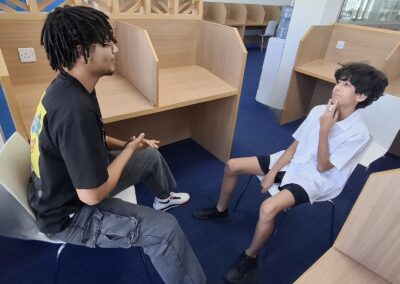
Several school leaders said that the impact of COVID-19 has led to more mental health issues amongst students, and 63% of respondents felt that at least some of the children from their school are obviously anxious during the school day. 61% of teachers and leaders considered distance learning to be the most challenging aspect of COVID-19 for children. Other significant challenges for children were limitations to extra-curricular activities, campus closures, and lack of socialisation.
When considering their own wellbeing, international educators cited active help and consideration from colleagues and senior leadership as the support they most valued. Several teachers felt wellbeing was verbalised by some senior leaders but not sufficiently or authentically addressed. Overall, most staff (71% of all respondents) felt that, as best it could, their school supported their wellbeing through the challenges of COVID-19.
Teachers and leaders felt that parents have played a crucial role in children’s education throughout COVID-19 with 83% of respondents feeling they could count on the support of most of their parents. This is a notable increase from the same question in wellbeing research of international schools conducted in 2018 when only 62% of respondents felt they could count on the support of most of their parents. It suggests that the challenges of COVID-19 shifted parental responsiveness. Time will tell if this continues once school life returns to normal.
The new report suggests that awareness of the importance of staff and student wellbeing, which was on the rise within many international schools prior to COVID-19, has been accelerated as a result of the pandemic. It is an initiative all international schools will have to address in some shape or form as more parents enquire about wellbeing provision within their school selection, and more teachers evaluate staff wellbeing provision in their choice of workplace.
In addition to highlighting the impact of COVID-19 on students and teachers within international schools, the new report also includes many practical suggestions on how teachers and school leaders can respond proactively to their own wellbeing and that of others.
There have been many silver linings to the pandemic experience, and a post-COVID world will provide the opportunity for reflection, evaluation of outcomes, and identification of the most effective approaches to wellbeing in schools. The new wellbeing report from ISC Research, which is free and accessible to all thanks to sponsorship from Oxford University Press, is available to download here.