
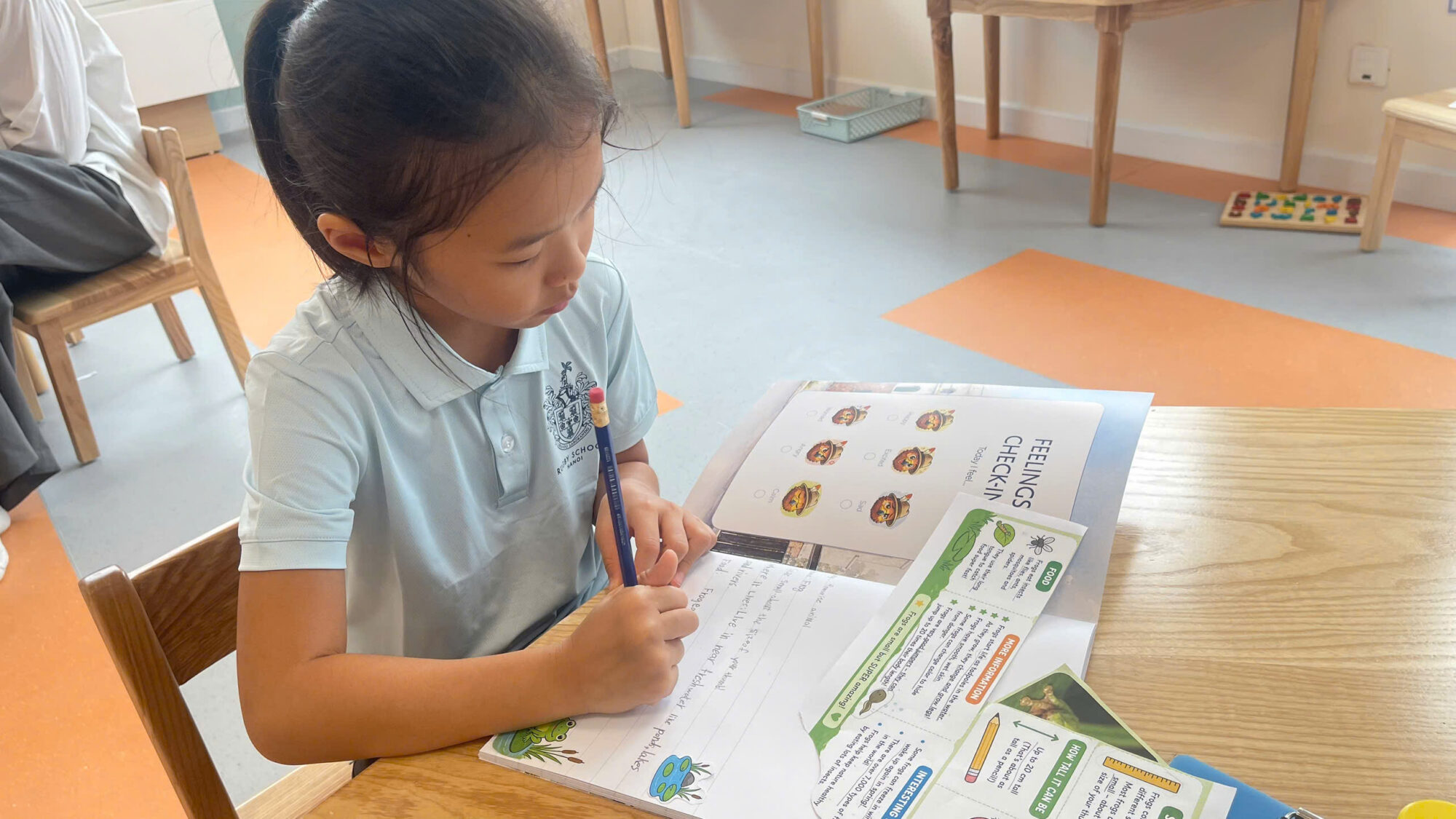
When Rugby School Hanoi opened its Pre-Prep, we were able to draw on the experience of colleagues across the Rugby School Group, alongside strong Early Years and Primary practice from elsewhere. The task was not to copy a ready-made model, but to make those ideas meaningful for young children growing up in Hanoi.
At the same time, our staff were joining a new school, and many were settling into a new city and country. Families were trusting us with children, some attending school for the first time. We needed to be clear about what had to be secure from day one: safeguarding, health and safety, care and routines, without overwhelming staff with every curriculum and assessment system at once.
Give teachers a way in
We built our planning around three connected layers. Curriculum and subject overviews set out what we wanted children to encounter and learn. Progression maps showed how knowledge, skills and independence would grow from the earliest years into Year 2. Half-termly medium-term plans then brought that thinking close enough to the classroom for teachers to use.
We did not expect our staff to absorb everything at once. The subject overviews gave them an initial sense of direction; the progression maps and medium-term plans added detail as they planned. One colleague described the overview as an anchor when it came to putting the meat on the bones of the plans. I liked that description. The documents were doing their job if they helped an experienced teacher make good decisions, not if they prescribed every moment of the day.
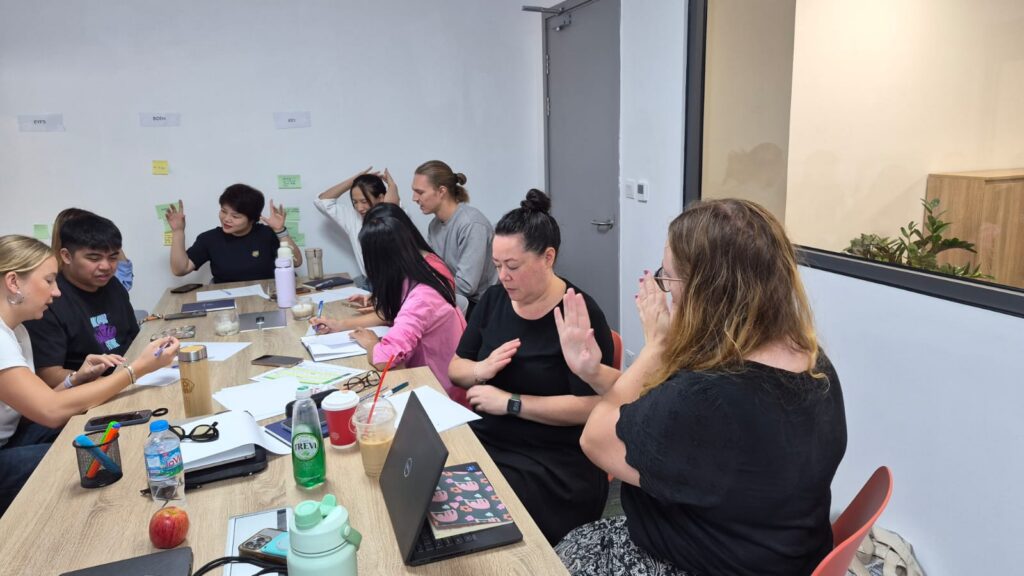
Short weekly after-school check-ins with each phase helped us work through questions as they arose. Our weekly training and alignment meetings gave us time to look at approaches together and draw on the team’s varied international experience, rather than reducing good teaching to one prescribed method. That rhythm will continue beyond the opening term. As new children and colleagues join us, we will use these conversations to review what is working, what children are experiencing and where progression needs strengthening. The subject overviews provide the shared direction; the medium-term plans can evolve as we learn.
“The documents were doing their job if they helped an experienced teacher make good decisions.” – Mark Symmonds
Let the place matter
Our foundations draw on the EYFS and the English National Curriculum, alongside the educational traditions of the wider Rugby School family. But a British curriculum in Hanoi should not be transferred wholesale; it needs to make sense in the place where children are growing up.
Vietnamese language and culture are part of how children come to know the place in which they live, while the languages, traditions and experiences of our diverse families enrich the community we are building together. Our enquiries also invite children to connect larger ideas to their own surroundings. Even a question such as “Did dinosaurs ever live in Hanoi?” turns a familiar topic towards their curiosity about the city.
“A British curriculum in Hanoi should not be transferred wholesale; it needs to make sense in the place where children are growing up.” – Mark Symmonds
We are at an early stage, and making these connections authentic will require continued work with Vietnamese colleagues and families across our community. Local relevance is not a festival added to an otherwise unchanged plan; it is a habit of asking whose places, languages and experiences the curriculum helps children understand.
Make room to know the children
Another decision was to phase in some of our more detailed assessment processes. This was not a decision to postpone assessment itself. In the first weeks, teachers were observing constantly: how a child communicated, joined play, managed separation, responded to a routine or asked for help. What we resisted was asking them to generate extensive subject-by-subject records before they knew the children well.
That time proved valuable. In Pre-Nursery and Nursery, several children were close to the age boundary between classes. Those first weeks allowed us to look beyond chronological age and understand the level of support, challenge and independence each child needed. We observed how they communicated, separated from their families, joined play, followed routines and managed increasing independence. Those observations helped us make more informed decisions about the support and provision that best suited each child.
It was a useful reminder that assessment is most valuable when it helps us understand the child in front of us. Had we begun by asking teachers to complete extensive subject-by-subject records, we might have collected more information, but not necessarily the information we needed most at that point.
“Observe before multiplying records.” – Mark Symmonds
Character development has worked in much the same way. Our Superskills give children a language for qualities such as care, teamwork and perseverance, but the meaningful moments are often small. Caring Koala might be visible when a child notices that someone needs help, makes space for another child in their play, holds a door for someone else or finds a question to ask a new friend. These everyday moments give children opportunities to practise the qualities we want them gradually to understand and make their own.
It is there, too, when a distressed child needs an adult close by. Comfort comes first. Then, gently, we help the child reconnect: perhaps listening to a song on an adult’s lap, joining in a little, and eventually returning to the group. The aim is not to hurry a child past their feelings. It is to help them feel safe enough to take the next step for themselves.
These are early days, so I would be cautious about making grand claims for impact. We are, however, beginning to see some encouraging early signs. Parents have noticed children becoming more comfortable coming to school and increasingly independent, while our regular conversations with teachers are helping us identify where plans provide useful clarity and where they need to evolve. These observations are not measures of curriculum quality in themselves, but they give us useful early indications of whether the structures we created are supporting the people they were designed to serve.
Lessons for curriculum leaders
- Start with what must be secure. Protect safeguarding, care, relationships and routines before adding systems that can wait.
- Give the curriculum a usable shape. A clear overview, progression and manageable planning should help teachers see both the destination and their next step.
- Build in the host-country context. Work with local colleagues and families so language, place and culture inform learning throughout the year.
- Observe before multiplying records. Decide which assessment is useful now and which will be more meaningful once teachers know the children.
- Keep the conversation going. Use short, regular check-ins to test what is working and let teachers’ expertise improve the plans.
You do not need to open a school to ask whether your curriculum gives teachers this kind of clarity and room to think. Established schools can also look again at what has accumulated over time, what deserves to stay, and what may be getting between adults and children. Our plans gave us a shared direction. The children who arrived in August are helping us learn how best to travel it.
By Mark Symmonds

Mark is the founding Head of Pre-Pre, Rugby School Hanoi
