The international school environment is uniquely complex. High student mobility, cultural diversity, rigorous curricula, and staff turnover intersect to create a range of wellbeing pressures for both staff and students. Addressing these challenges in isolation risks creating unsustainable short-term fixes that fail to tackle the root cause.
ISC Research’s latest white paper, How International Schools are Prioritising Wellbeing for Staff and Students, shows that schools need to treat wellbeing as a structural foundation, central to academic achievement, staff retention, and long-term success. Without this shift, and by continuing to treat wellbeing as a peripheral concern, international schools risk deepening the very challenges they seek to overcome.
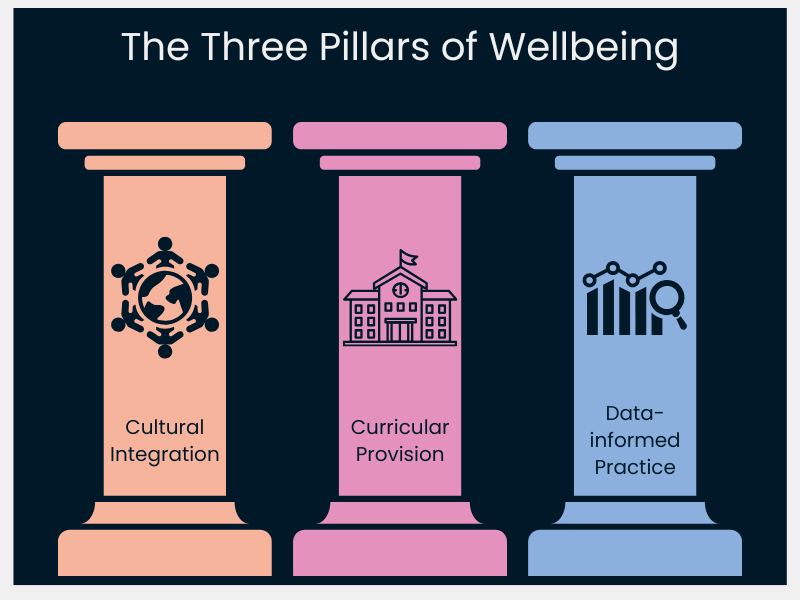
Sustainable wellbeing requires more than good intentions; it demands a framework built on three interconnected pillars – cultural integration, curriculum provision, and data-informed practice – that guide schools in embedding wellbeing across every level.
Pillar One: Building a Culture of Wellbeing
Wellbeing achieves lasting impact when it is integrated into the rhythms of daily school life. Students, teachers, parents, and leaders can all contribute through actions such as creating emotionally safe learning spaces, celebrating acts of kindness, leading structured workshops, and participating in community initiatives that reinforce social-emotional skills.
At Light International School (LIS) Mombasa, this cultural shift took place when wellbeing moved from a leadership-led initiative to a community-owned strategy. Principal Ildar Iliazov implemented a whole-school approach, involving parent advisory boards in policy discussions, peer mentoring networks across age groups, and training teachers to consistently model positive behaviours. Together, these efforts show how shared commitments can lay the foundation for deeper trust, resilience, and awareness in schools.
Pillar Two: Designing a Curriculum to Foster Resilience
A school’s curriculum is a powerful signal of its priorities. When wellbeing is confined to brief or isolated sessions, it can be perceived as optional rather than essential. Integrating empathy and life skills into daily lessons ensures students gain practical strategies to manage stress, collaborate effectively, and navigate challenges inside and outside the classroom.
Strothoff International School in Germany exemplifies this approach. Secondary Principal Julia Campbell-Ratcliffe led a curriculum redesign combining IB core requirements with social-emotional themes such as mindfulness and digital balance, replacing the previous reliance on brief check-ins with a more systemic approach to wellbeing.
The question is no longer whether to prioritise wellbeing, but how to do it effectively. Join our upcoming webinar on 27th November, What Happens When Schools Put Wellbeing First?, where school leaders including Julia Campbell-Ratcliffe, and experts will share practical insights and real-world examples of wellbeing in action.
Pillar Three: Data-Driven Approaches to Wellbeing
Wellbeing can feel intangible, but evidence-based decision-making allows school leaders to identify patterns, anticipate challenges, and implement timely interventions. Data ensures resources are targeted where they will have the greatest impact, turning wellbeing from an abstract goal into a strategic priority.
At Transylvania College in Romania, wellbeing had been highly valued but lacked consistent metrics. Through a partnership with AI-powered wellbeing platform Spark Generation, the school introduced a structured programme of regular surveys and personalised courses, with results displayed on dashboards for real-time insight. This approach informed timetable adjustments and targeted counselling services, engaging staff and students and creating a culture in which wellbeing is regularly monitored, discussed, and refined.
From Aspiration to Action
For leaders and educators, the implications are clear: wellbeing must be embedded as a proactive strategy to support academic success, staff retention, and long-term sustainability. ISC Research’s white paper, How International Schools are Prioritising Wellbeing for Staff and Students, provides an in-depth exploration of these findings, with actionable guidance for schools and education suppliers to integrate wellbeing across culture, curriculum, and data collection.