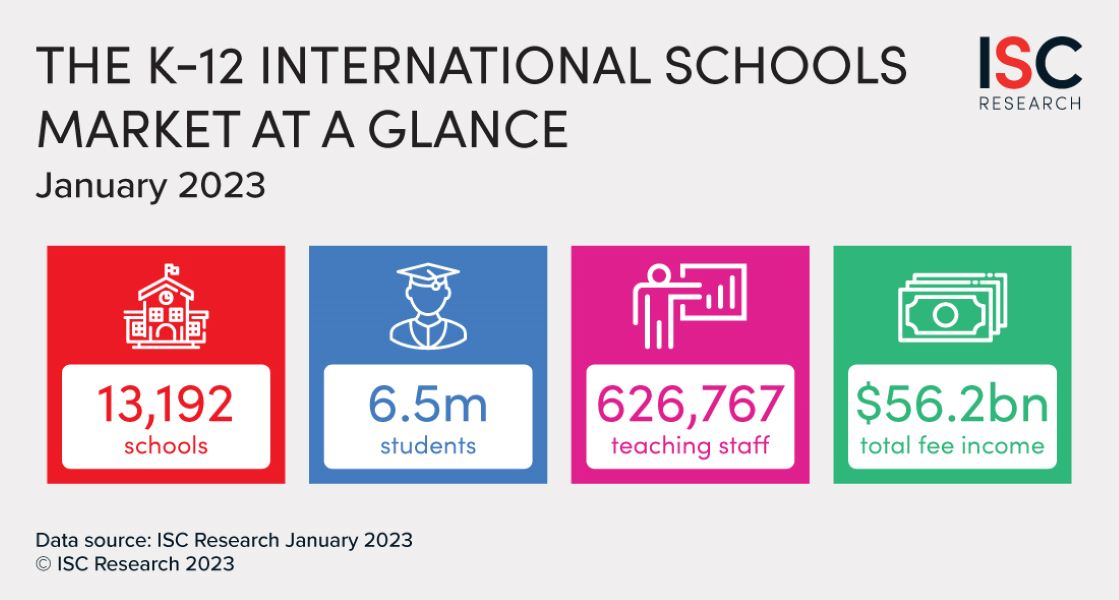
January 2023 data released by ISC Research shows that 6.5 million children between the ages of 3 and 18 are currently enrolled at international schools around the world: a 53% growth in the market since 2013.
International schools are a common sight today in many cities of the world. The ISC Research data from January indicates there are now 13,190 international schools where English is one of the languages of learning. This increased school presence helps raise awareness of their existence and accessibility to more families. These factors and others have combined to drive up the admissions demand at many international schools.
The ISC Research data shows that South-Eastern Asia has experienced a 23% growth in the enrolment of students in its international schools over the last five years. During that same time, the number of international schools in the sub-region increased from 1,600 to 1,940. The field research conducted by ISC Research suggests this is due to a rise in both enrolments of host nation students, as well as expatriates who have moved to the sub-region because of new development by multinationals, foreign businesses and start-ups.
A lower cost of living in several Southeast Asian countries, increasing career choices, and the potential for extensive travel opportunities are making them an inviting destination for many expatriates. The impact of COVID-19 has introduced a new factor to destination choice for some expatriates who are now also prioritising their wellbeing and considering how to address the challenges they may face from future country lockdowns. As a result, the lifestyle and domestic travel offerings within countries like Thailand and Vietnam, as well as their management of the pandemic, are making them an appealing choice for many.
This expatriate growth, along with the relative freedom by governments for host nation children in most Southeast Asian countries to attend their local international schools, mean that the schools in the sub-region are experiencing high demand.
These and other factors impacting growth within the international schools market are explained in a new white paper now available from ISC Research. The white paper explores government influence, common drivers, local impact and micro factors influencing market growth and shares insights from four international schools about the reasons behind their admissions shifts. It is available to download here